Key Takeaways:
- Porcelain’s non-porous surface means stubborn BBQ grease, wine, and pet claws won’t leave a mark, whereas composite can be permanently stained or scratched.
- Porcelain requires only a quick sweep or hose down to stay clean, while composite’s textured ridges constantly trap pollen, dirt, and green mould.
- Porcelain is laid on a solid concrete bed that outlasts your mortgage, eliminating the hidden timber sub-frames used under composite decks that silently rot from moisture.
“Low-maintenance” is the biggest lie told in the garden design industry today. We’ve all seen pristine brochures of composite decks, but they never show you what happens when autumn leaves rot in the grooves, or when a dropped spatula leaves a permanent grease ring.
Many homeowners choose composite to escape painting traditional wood, only to find the hidden timber frame rotting silently beneath them less than a decade later. It’s a stressful, expensive headache that we see far too often in our line of work, and it’s the exact reason our customers switch to porcelain.
If you want that sleek plank look without the exhausting weekend chores, let’s look at how these two materials actually compare in real life.
Table of Contents:
- Porcelain Planks
- Composite Decking
- Porcelain Planks vs. Composite Decking – Maintenance Differences
- The Verdict – Which Is Easier To Maintain?
1. Porcelain Planks
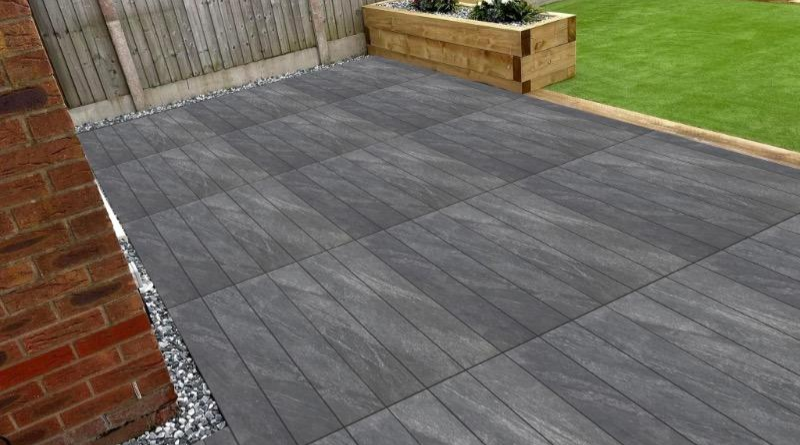
Don’t confuse outdoor porcelain with delicate indoor tiles. Outdoor porcelain planks (150 x 900 mm size) are ultra-dense, thick architectural pavers vitrified at over 1,200°C to withstand the harshest elements of the British climate.
Porcelain Planks Pros
- Near-Zero Porosity – porcelain has a water absorption rate of less than 0.05%. This means moisture, frost, liquid spills, and airborne spores literally cannot penetrate the surface.
- Exceptional Scratch and Dent Resistance – whether you have hyperactive dogs, heavy cast-iron patio furniture, or kids dragging plastic toys across the terrace, your porcelain will not gouge, scratch, or pit.
- Incredible Longevity – a correctly installed porcelain patio will easily outlive your mortgage. It doesn’t warp, rot, bow, or degrade over time.
Porcelain Planks Cons
- Higher Upfront Installation Costs – laying porcelain planks requires a highly skilled installer, a solid concrete or aggregate sub-base, specialised priming slurries, and diamond-blade cutting equipment.
- Difficult to DIY – because the material is so dense and unforgiving, it isn’t a project you can casually tackle over a single weekend with basic tools. Precision cutting and proper fall alignment require professional expertise.
- Cold Underfoot in Winter – porcelain adapts to the ambient temperature. While it retains heat beautifully in the summer, it can feel cold underfoot during the crisper autumn and winter months.
2. Composite Decking
Composite decking blends recycled wood fibres with plastics and bonding agents to create a synthetic alternative to timber. While it provides a familiar, slightly raised boardwalk feel and a simpler installation process, it introduces unique synthetic vulnerabilities that many homeowners don’t anticipate.
Composite Decking Pros
- Familiar Wood-Like Aesthetic – it provides that classic, slightly raised boardwalk feel that many homeowners explicitly want for their garden transitions.
- Easier and Faster Installation – because it can be cut and screwed just like traditional timber, installation labour costs are generally lower, and it is a viable option for competent DIY enthusiasts.
- Splinter-Free and Barefoot Friendly – the plastic blend ensures that the boards will never split or splinter, making it a relatively safe surface for young children and pets to walk on.
Composite Decking Cons
- Susceptible to Thermal Expansion – plastic expands when hot and contracts when cold. If an installer doesn’t leave exact expansion gaps, composite boards can buckle, warp, or pull away from their fixings during a summer heatwave.
- Heat Retention – on hot summer days, the plastic composition absorbs solar radiation rapidly. Darker composite decks can become scalding hot, often too hot for bare feet or pet paws.
- Hidden Timber Substructures – while the composite boards themselves won’t rot, they are almost always screwed onto a hidden timber frame. If that timber framework rots underneath, the entire deck fails.
- Unreversible Scratches – if you drag a heavy metal fire pit or sharp chair leg across a composite board, the scratch is permanent.
Porcelain Planks vs. Composite Decking – Maintenance Differences
To find the true winner, we have to look past day one and look at the real-world realities of changing seasons, family life, and British weather.
Regular Cleaning Routine – Scrubbing vs. Sweeping
Porcelain planks require nothing more than a quick sweep to clear leaves. If the surface gets muddy, a simple mop down or a quick rinse with a garden hose brings it straight back to a showroom finish.
Composite decking needs significantly more elbow grease because the manufactured wood-grain grooves act as tiny traps for dust, dirt, and pollen. To keep it clean, you frequently have to scrub the channels with a stiff brush or pressure-wash the surface.
Dealing with Stubborn Stains (BBQ Grease, Wine, etc.)
Because porcelain is vitrified and completely non-porous, dropped grease from a BBQ or spilt red wine won’t be a big deal. You can ignore it until the next morning and effortlessly wipe it away with zero residual staining.
Composite decking (even modern capped varieties!) is highly sensitive to oils and acids. If a spill isn’t wiped up immediately, the grease can penetrate the wood fibres or bond with the plastic, leaving a permanent, unsightly mark.
Weather Resistance and Long-Term Wear
Porcelain planks absorb virtually no water, making them completely immune to the freeze-thaw cycle that causes lesser materials to crack. They handle British winters and scorching summers without shifting an inch.
Composite decking struggles with dramatic temperature swings because the high plastic content causes the boards to expand and contract. Over time, this thermal movement puts immense stress on fasteners, leading to warped joints.
Algae, Moss, and Mould Resistance
The glass-smooth, non-porous nature of porcelain means algae and green mould have no organic material to feed on. If a green film forms over a damp winter, it simply sits on top of the tile and washes off effortlessly.
Composite contains natural wood fibres, which act as a direct food source for spores. Once mould establishes roots inside the damp, shaded grooves of a deck, it needs aggressive chemical treatments to fully remove.
Fading, Scratching, and UV Damage
The mineral pigments in porcelain are baked into the clay at 1,200°C, meaning the sun cannot alter its chemical structure. It is also incredibly hard, making it virtually impossible to scratch with heavy patio furniture or dog claws.
Direct UV exposure gradually breaks down the plastics in composite decking, causing the boards to fade over time. Furthermore, any deep scratches from dragged furniture are completely permanent and cannot be repaired.
Repair and Structural Upkeep
Porcelain planks are laid on a permanent concrete bed, leaving no timber to rot or structural framework to fail. On the rare occasion a tile chips, a professional can neatly replace that single plank in a few hours.
Most composite decks are built on hidden timber joists that trap moisture and can rot silently from the inside out. Additionally, replacing a single damaged board requires dismantling entire interlocking sections of the deck.
The Verdict – Which Is Easier To Maintain?
While both materials are better than traditional timber, porcelain planks win the maintenance battle by a landslide.
Composite decking is lower maintenance than wood, but it still demands your attention. You will always have to worry about immediate spill cleanups, scrubbing the grooves, fading colours, permanent scratches, and the ticking time bomb of a rotting timber frame underneath.
Porcelain planks offer true zero-compromise, hassle-free living. They give you the beautiful look of linear timber flooring with the wipe-clean performance of an internal kitchen floor. If you want to spend your weekends relaxing on your patio rather than working on it, porcelain is the only logical choice.
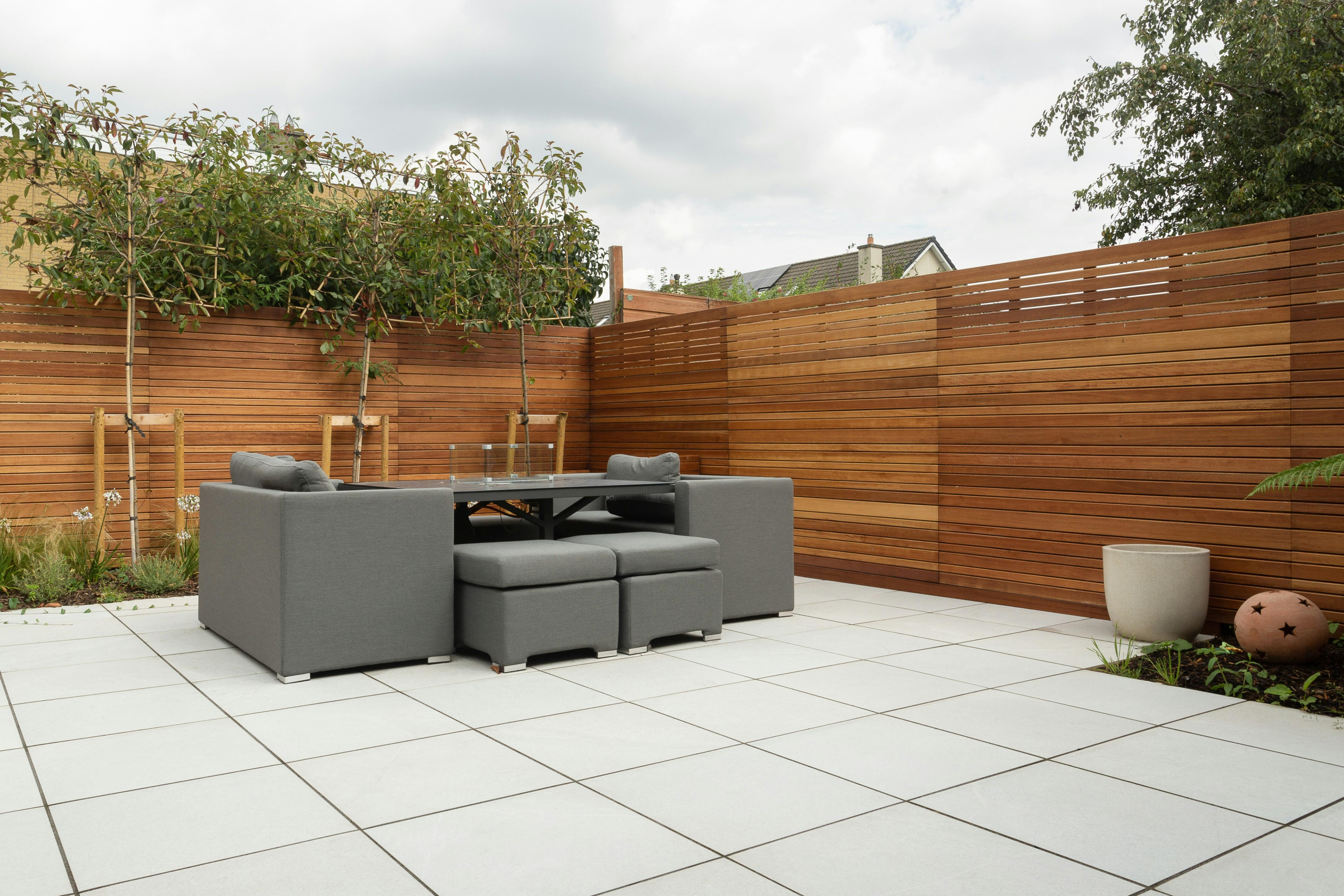
Transform Your Garden with Pegseo Stone Porcelain Planks
At Pegseo Stone, we specialise in sourcing the highest-grade porcelain planks designed to bring timeless elegance and absolute peace of mind to your outdoor space.
Don’t just take our word for it – feel the quality in your own hands. Order porcelain planks or get your free samples today →