Key Takeaways:
- Porcelain vs. Sandstone: Traditional stone absorbs spills and turns green with algae, but vitrified porcelain lets you buy your weekends back.
- The 20mm Rule: Falling for cheap indoor tiles online will cause your patio to crack during the first winter frost.
- The Non-Negotiable Safety Rating: Anything less than an R11 slip rating will turn your beautiful garden into a dangerous ice rink when it rains.
Investing in a new garden layout is a massive financial commitment, and the last thing you want is for your chosen porcelain patio colours to look harsh, clinical, or dark once laid outside.
Truth is, choosing the wrong slab size or colour palette can accidentally highlight the worst features of your property rather than turning it into the envy of your neighbours.
With years of experience helping homeowners curate beautiful spaces, we’ve put together this definitive guide to help you match the right dimensions and tones to your garden’s unique requirements. Let’s look at how to get it right.
Table of Contents:
- Is Porcelain Paving The Right Choice?
- Choosing the Best Porcelain Tiles For Your Garden
- Transform Your Garden with Pegseo Stone Porcelain Paving
Is Porcelain Paving The Right Choice?
Let’s get one doubt out of the way.
If you’re redesigning your garden and looking for the best paving option, porcelain paving is ABSOLUTELY the best choice.
The main reason homeowners are moving away from traditional garden materials isn’t just about modern garden paving ideas, but about buying your weekends back.
Traditional options like natural Indian sandstone or concrete are highly porous. They act like giant sponges, absorbing rainwater, winter grime, dropped BBQ grease, and red wine stains. Within a season or two, you are left with a faded, patchy surface covered in slick green algae.
Premium vitrified porcelain undergoes a high-temperature manufacturing process that makes it practically non-porous (with a water absorption rate of less than 0.05%). This means dirt, wine, and moss simply cannot penetrate the surface.
Choosing the Best Porcelain Tiles For Your Garden
So, how do you choose the exact right porcelain paving specifications (size, thickness, and colour) so your garden looks stunning, stays safe, and doesn’t become a costly redesign project shortly after?
Porcelain Tiles Size & Thickness
Outdoor porcelain tiles must be 20mm thick.
You will frequently see cheaper, beautifully patterned 10mm or 12mm porcelain tiles online, but these are strictly indoor tiles designed to be laid on solid concrete internal subfloors. If you install 10mm tiles outside, they will lack the structural integrity to handle heavy patio furniture, and the first hard winter frost will warp, crack, and lift them completely. Always insist on 20mm vitrified porcelain for external use.
With the thickness locked in, you can now look at how different slab shapes create distinct modern garden paving ideas:
Large Format (600x900mm)
These massive, rectangular slabs are the absolute gold standard for contemporary design. Because the individual tiles are so large, you’ll need significantly fewer grout lines across your patio, which creates a sleek, unbroken surface.
If you have a small or medium-sized garden, large-format slabs are a fantastic trick to visually expand the space, making it feel grander and less cluttered.
Porcelain Planks (150x900mm)
Mimicking luxury timber decking but without the warping and rotting, porcelain planks offer a highly stylised look. They introduce distinct linear patterns to a garden, making them exceptional for creating specific architectural zones, dining borders, or pathways.
| Learn more about how porcelain planks compare to composite decking. |
Porcelain Patio Colours
Choosing your slab size sets the structure, but picking the right shade defines the entire mood of your outdoor home. The colour you select interacts constantly with the changing British weather, your home’s brickwork, and the natural sunlight your garden receives.
|
|
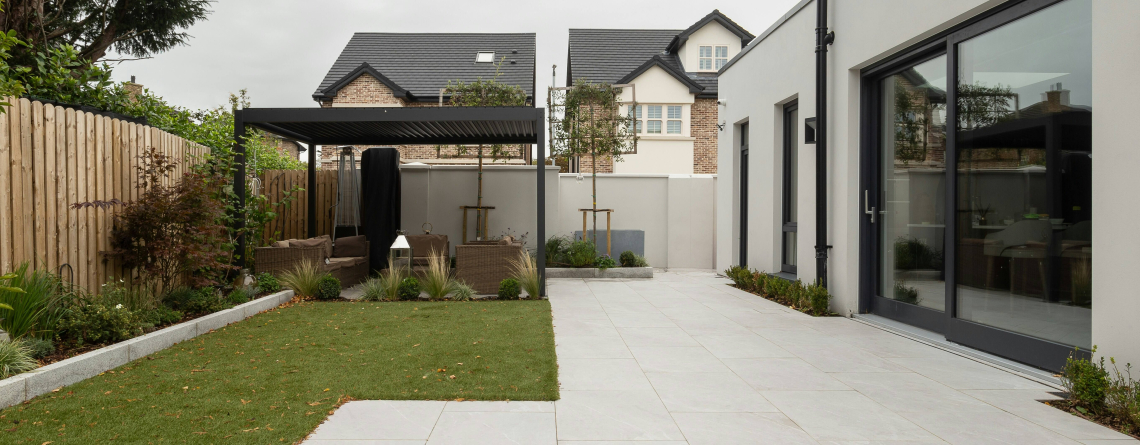
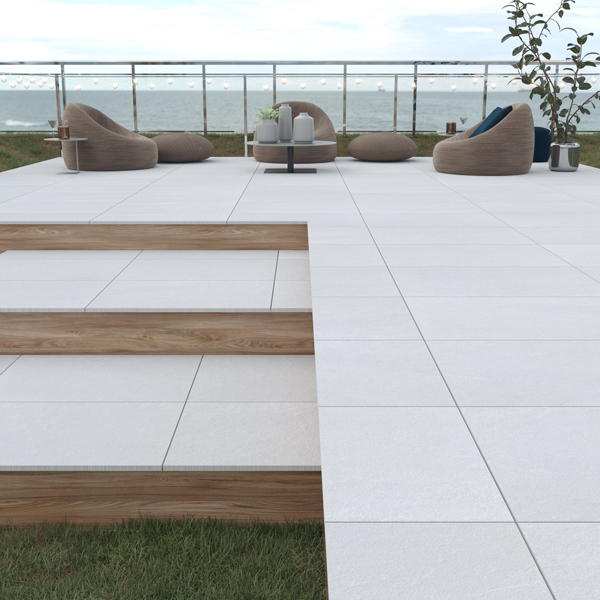
1. The Brighteners (Whites, Light Greys)
If your garden feels dark or gloomy for most of the year, light-toned porcelain acts like a giant mirror. It bounces whatever natural light is available back up into the space, instantly making your patio feel bright, airy, and expansive. |
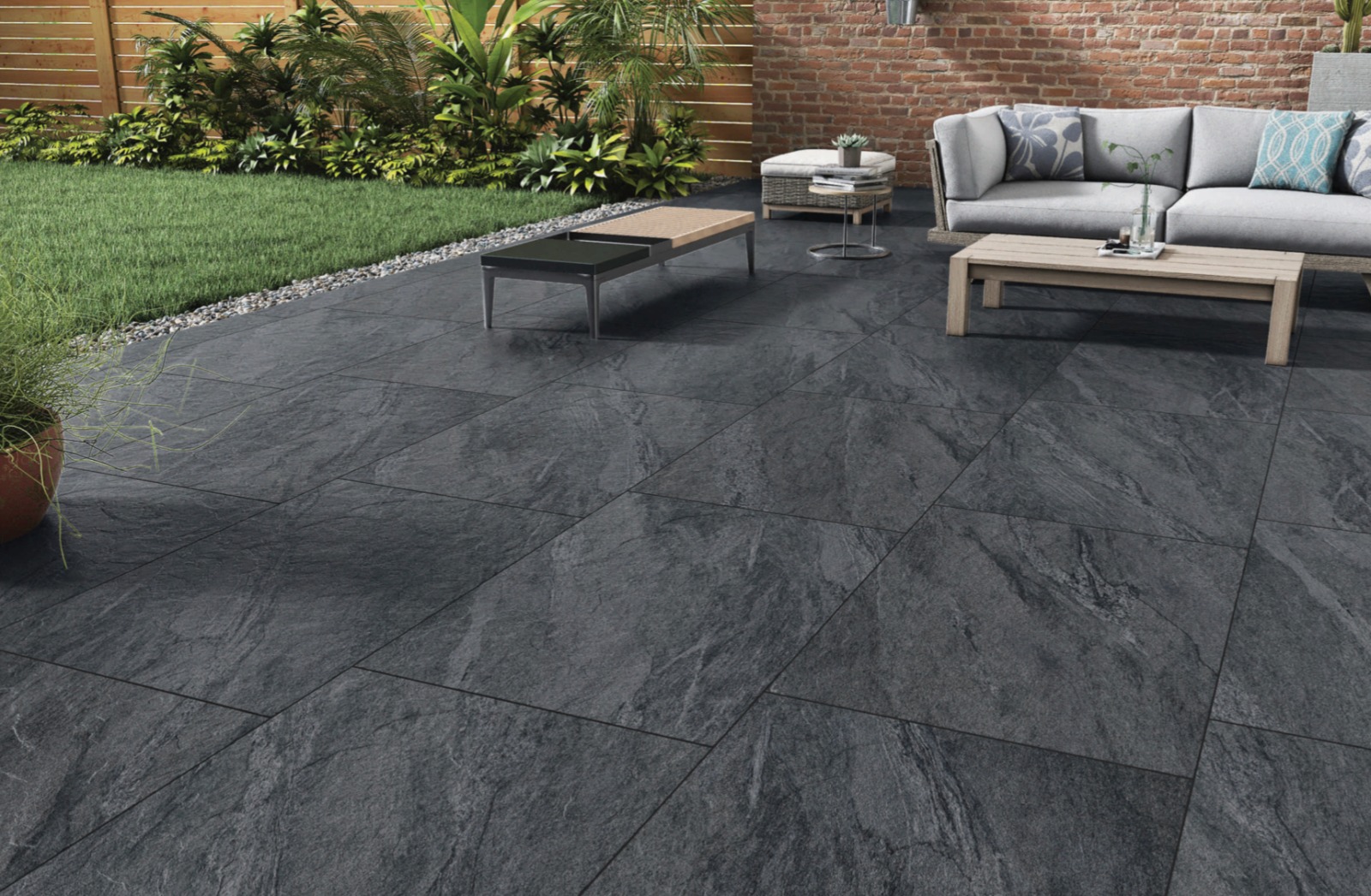
2. The Contemporaries (Anthracite, Charcoal, Dark Grey)
Dark slate and charcoal tones provide a striking, dramatic backdrop. They look exceptionally crisp when paired with bright green foliage, black metal pergolas, or white render walls. |
|
|
|
3. The Warmers (Beige, Buff, Taupe)
This is the perfect way to introduce an organic, earthy, or Mediterranean-terrace vibe to your space. You’ll soften the boundaries of your garden while still delivering all the sleek, sharp edges of modern vitrified stone. |
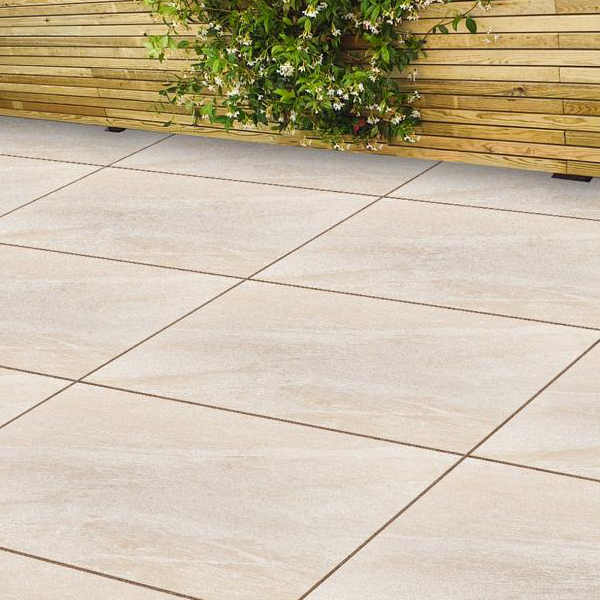
| We know how exhausting it is to scroll through hundreds of grey paving slabs, wondering if they’ll actually look the same in your garden as they do on a screen. Make a confident choice by ordering free porcelain samples directly through our website. |
Extra Safety Features
The British climate can be brutal. To ensure your dream patio doesn’t turn into a seasonal headache, here are the two technical safety specifications that are absolutely non-negotiable.
R11 Slip Rating
Any porcelain laid externally in the UK must carry an R11 rating. This means the tile has been specifically engineered with a subtle, textured surface that provides an invisible safety grip.
When the British winter hits, or when your kids are running around barefoot after playing with a garden sprinkler, the R11 texture will give exceptional traction. Crucially, premium porcelain achieves this safety grip without feeling rough, sharp, or unpleasant to walk on in your socks. Anything lower (like an R9 or R10 tile) is strictly an indoor tile and will become dangerously slick the moment it rains.
Frost Resistance
Traditional paving stones like Indian sandstone or concrete are naturally porous—they look solid, but they are full of microscopic holes. In the winter, rainwater seeps deep into these holes. When the temperature drops below freezing, that trapped water expands into ice, creating internal pressure that causes traditional stone to flake, crack, and lift over time.
Premium porcelain, on the other hand, is baked at temperatures exceeding 1200 °C under immense pressure, completely vitrifying the clay. This process seals every microscopic pore, resulting in a water absorption rate of less than 0.05%. Your porcelain slabs will never crack in the dead of winter.
Transform Your Garden with Pegseo Stone Porcelain Paving
At Pegseo Stone, we specialise in sourcing the highest-grade porcelain paving designed to bring timeless elegance and absolute peace of mind to your outdoor space.
Don’t just take our word for it – feel the quality in your own hands. Order porcelain paving or get your free samples today →