ARTICLE CONTENTS
01 Why is porcelain paving a popular choice?
03 Cons of porcelain paving
05 Porcelain paving costs
07 Shop our porcelain tiles
02 Benefits of porcelain paving
04 At-a-glance summary
06 Vs. concrete, stone & decking
08 Frequently asked questions
Your outdoor space is ready for an upgrade, and porcelain paving has that sleek, modern aesthetic you’re looking for – but is it really worth the investment? Let’s break down the pros and cons of porcelain tiles, as well as the costs associated with various types of paving (including long-term maintenance).
Why is Porcelain Paving a Popular Choice?
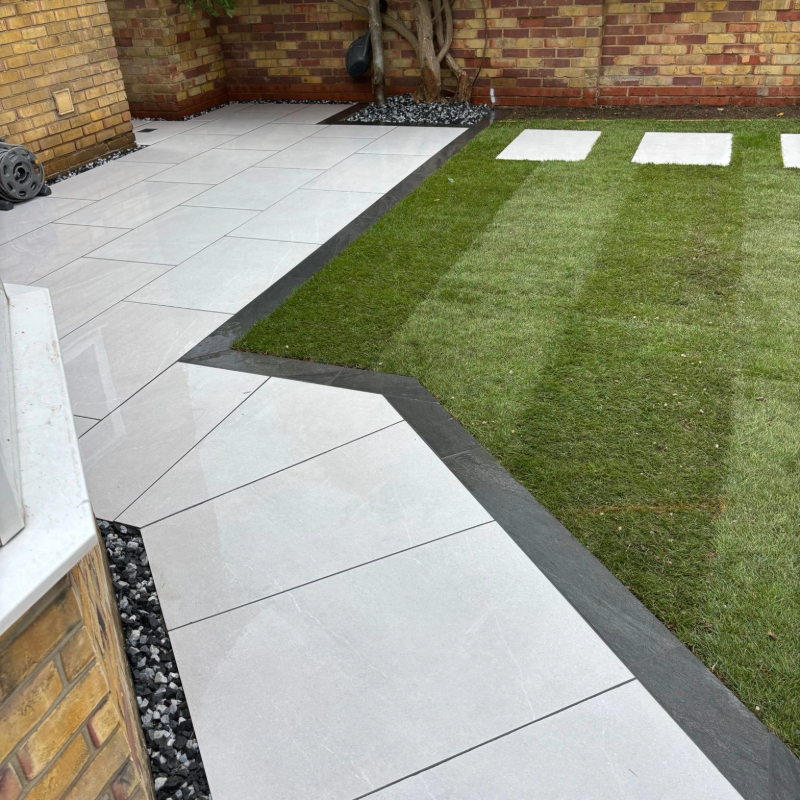
Porcelain paving is the new home improvement trend, offering a sophisticated, contemporary aesthetic that instantly elevates any landscape. Many people have found that porcelain slab tiles can replicate the luxurious appearance of high-end natural stone or even the texture of rustic timber, all while maintaining a consistently uniform finish.
Its popularity also comes from how versatile it is – from patios to seating spots, and even garden pathways, you can use this type of pavement for any part of your exterior to create an elegant atmosphere.
 Did you know?
 Did you know?
Porcelain tiles absorb less than 0.5% moisture — far lower than concrete or natural stone — making them highly resistant to frost damage, cracking, and staining in the UK’s variable climate.
The Pros & Cons of Porcelain Paving
 Benefits of Porcelain Paving
 Benefits of Porcelain Paving
Versatility
Porcelain is an excellent choice for nearly all outdoor area applications. It performs exceptionally well in spaces with heavy foot traffic, but its consistent quality and finish make it equally suitable for secluded seating areas and defined outdoor dining spaces.
You can even use it for pathways that link different areas of your garden, to create a truly cohesive, visually pleasing look.
Durability
One of the benefits of porcelain paving, and arguably its strongest attribute, is the high durability. It is inherently resistant to stains, frost damage, and fading caused by harsh UV sunlight, making it capable of enduring all types of weather.
When installed to the correct professional standard, these patio slabs can easily withstand heavy foot traffic and strong impacts, keeping them in excellent shape for decades.
Maintenance
As a homeowner, the last thing you want is to add one extra task to your cleaning schedule.
The good news is, porcelain requires fairly low maintenance over its lifespan – there is no need for specialist tools, complex cleaning regimes, or annual sealing. The non-porous surface also prevents moisture absorption, keeping its surface free of algae, moss, and mould.
Maintenance Tip
 Maintenance Tip
Annual pressure washing on a low setting (1,200–1,500 PSI) is typically all that’s needed to keep porcelain paving looking brand new. No sealing, no specialist products.
Design Options
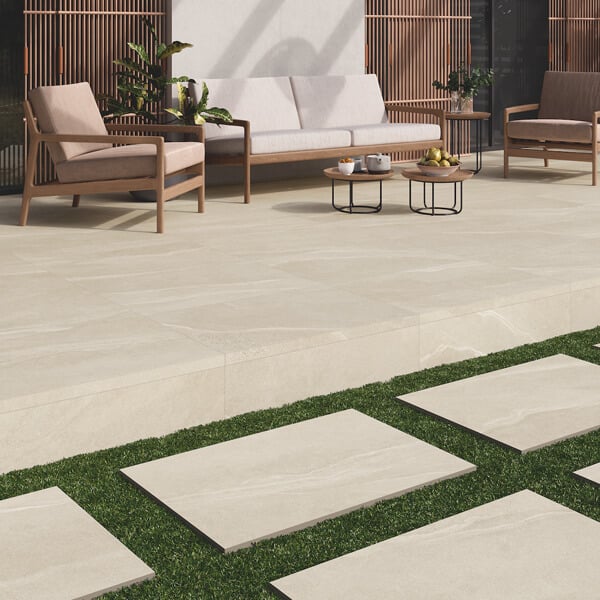
Whether you prefer deep, dramatic colours or a light, sophisticated texture, porcelain offers many choices. It is available in a wide range of sizes and colours and can be installed in numerous patterns.
The sheer variety of porcelain tile designs can help you create a visually stunning outdoor space, or design an entryway that impresses guests before they even step inside your home.
Safety
Most premium paving slabs feature a texture that provides certified slip-resistant properties (look for an R11 rating or higher), making the area perfectly safe for family use even during cold autumn rains or summer drizzles.
Fireproof
Unlike materials such as wood decking, porcelain is naturally fireproof. This makes it the ideal choice for patio features such as a permanent barbecue station, fire pit, or outdoor kitchen.
BROWSE OUR RANGE
Ready to see our porcelain collection?
Over 80 porcelain slab designs from £12/m² — budget through to luxury.
Cons of Porcelain Paving
 Cons of Porcelain Paving
Cost
Porcelain will have a higher initial upfront cost compared to basic poured concrete or entry-level natural stone. However, it is essential to consider the investment through a long-term lens: the significantly lower maintenance expenses and its much longer lifespan effectively reduce your total spend over the many years you will enjoy the patio. You are investing in long-term durability and retained value.
Slippery When Wet
While textured outdoor tiles are slip-resistant, opting for ultra-smooth or polished finishes may result in a slippery surface on a rainy day if they lack the appropriate outdoor rating. Always verify the slip resistance rating for your porcelain paving slabs (R11 is the general recommendation for patios). If you have existing smooth tiles, a professional anti-slip coating can sometimes be applied.
Maintenance Tip
Annual pressure washing on a low setting (1,200–1,500 PSI) is typically all that’s needed to keep porcelain paving looking brand new. No sealing, no specialist products.
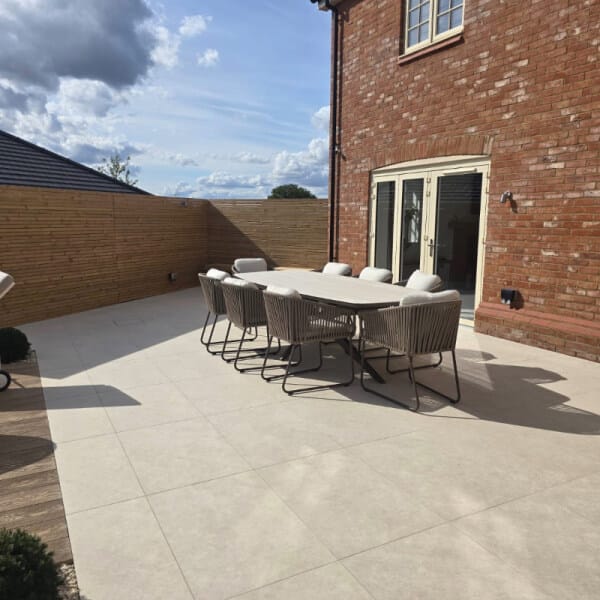
Difficult Installation
Porcelain is extremely hard, dense, and difficult to cut accurately if you’re simply DIY-ing it. Still, while it is undoubtedly a demanding task, it can be achieved successfully with meticulous planning and professional execution. We have prepared an easy-to-follow, detailed porcelain tile installation guide to assist you in this process.
Style Mismatch
The uniform, sleek appearance of porcelain makes it the standout paving choice for contemporary or minimalist garden schemes. If your vision is a traditional English cottage garden or you favour a more rustic, classic aesthetic, then you may prefer to explore something like natural stone.
Porcelain Paving Costs – A Quick Guide
Some alternatives to porcelain paving include natural stone, concrete paving, and composite paving, each with its own unique features and benefits.
When evaluating paving materials, the wise choice is to compare the total lifecycle cost, rather than focusing only on the immediate purchase price. See how porcelain compares to indian sandstone, concrete, and composite decking below:
Porcelain Tiles
As mentioned above, the initial costs for porcelain slabs are moderate to high, but result in very low maintenance costs over the years. The fact that they are so resistant to fading & staining also ensures they keep a pristine look for decades.
Concrete
It’s true, standard concrete comes with a very low upfront cost – however, the hard part begins after installation. Concrete is highly prone to staining, surface cracking, and colour fading, and requires regular moderate maintenance (e.g. cleaning, periodic sealing).
Natural Stone (E.g. Sandstone)
Just like porcelain, natural stone paving comes with a higher initial cost. In the long run, it can keep its beautiful looks, but remains vulnerable to moss, deep staining, and natural weathering. You will need to maintain it regularly, and sometimes may even need to consider chemical treatment and professional sealing.
Composite decking
A comparable material to porcelain is composite decking. It comes with a slightly higher upfront cost, but will also require little maintenance over the years. Composite decking is resistant to rotting/splintering, though slight colour degradation can occur.
Our Pegseo Porcelain Tiles
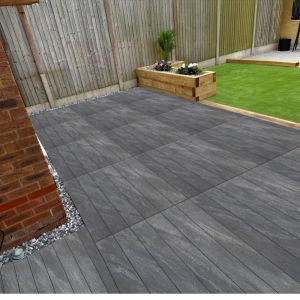
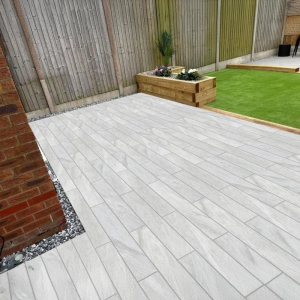
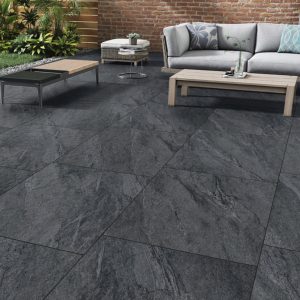
Even with low long-term maintenance costs, sometimes the upfront costs simply don’t match your current budget. At Pegseo, we supply quality porcelain paving in various colours and styles, matching a wide range of budgets – check some of our most popular choices below:
Budget Porcelain Tile Options
|
|
Midrange Porcelain Tile Options

|
|
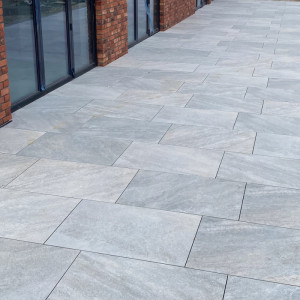
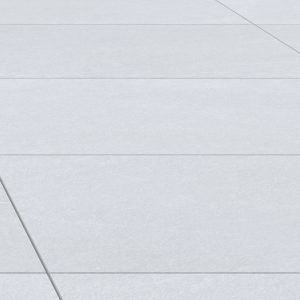
Luxury Porcelain Tile Options
|
|
| Don’t settle for basic – browse our full collection of porcelain pavement tiles and find the best match for your vision! |