Key Takeaways:
- Porcelain delivers a sleek, uniform look perfect for modern designs, while natural stone offers a unique, organic character ideal for traditional settings.
- Porcelain is non-porous and virtually maintenance-free, whereas natural stone acts like a sponge, requiring regular sealing to prevent deep stains, odours, and algae.
- With a water absorption rate under 0.1%, porcelain is immune to frost-cracking, pet urine etching, and stubborn BBQ grease stains that permanently ruin stone.
- Both materials require identical, flawless groundwork—including a vital slurry primer backing—to ensure the slabs don’t pop loose after a freeze.
Choosing a patio material based on a beautiful showroom display is a trap. In reality, Britain’s damp climate treats natural stone like a giant sponge – meaning you’ll get stuck in a cycle of inevitable staining, fading, and resealing.
You buy a patio for backyard barbecues and lazy Sunday mornings, not to spend more money, time, and energy maintaining it. Over the last decade of supplying paving, we’ve seen time and time again exactly how porcelain breaks this exhausting cycle by offering a zero-compromise alternative. This breakdown goes beyond the surface aesthetics to look at the true lifespan costs of both materials. Let’s dive in.
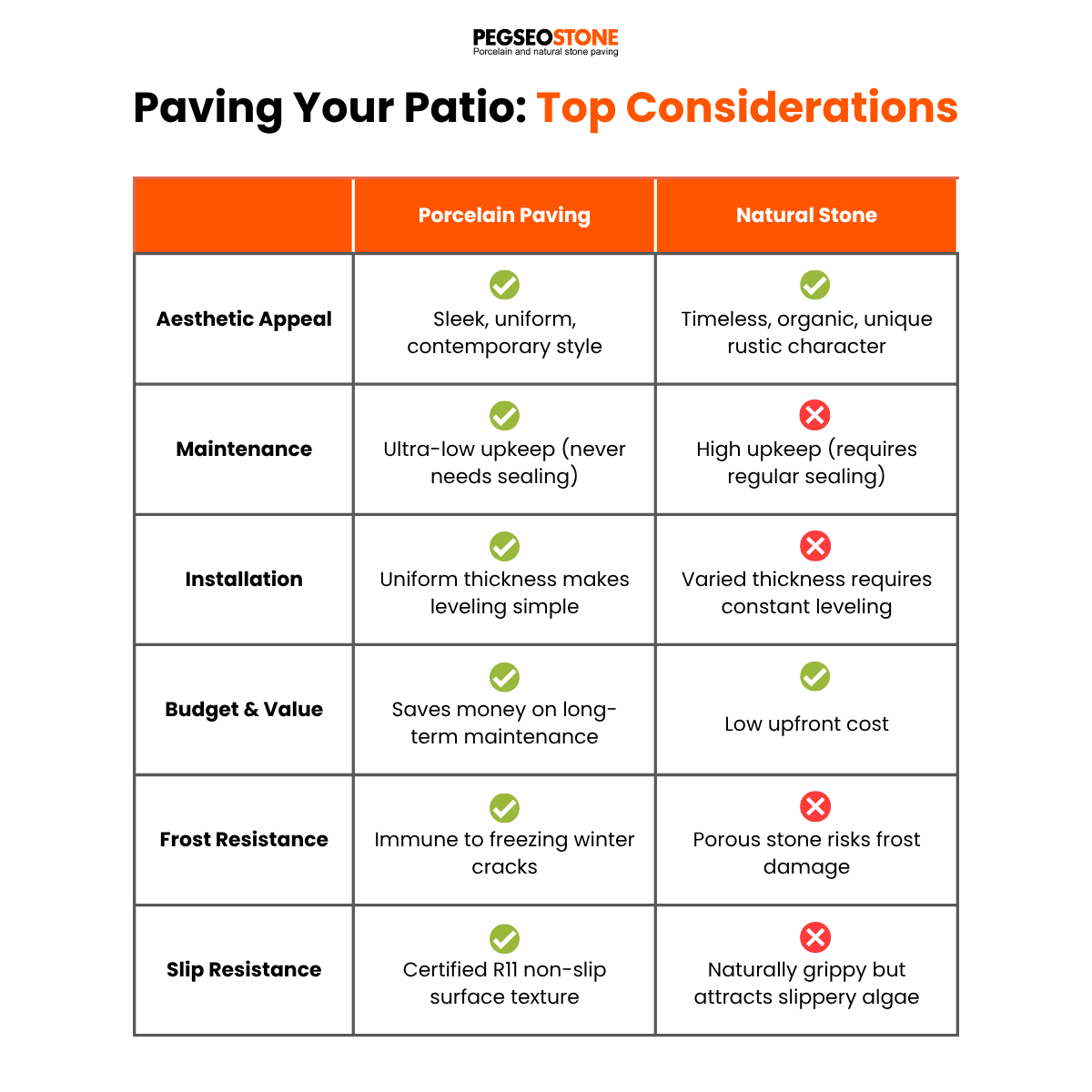
Paving Your Patio – Top Considerations
While natural stone (like sandstone, limestone, and slate) has been the traditional go-to for decades, high-tech porcelain paving has rapidly disrupted the market. Both are incredibly strong, but they interact with the elements (and your daily life) in completely different ways.
To help you make the right choice for your specific property, budget, and lifestyle, let’s look past the surface aesthetics and dive into the real-world performance metrics of both materials.
Aesthetic Appeal and Property Style
The architectural style of your home should heavily dictate what goes underfoot.
For starters, natural stone offers a timeless, organic character. No two slabs are exactly identical – you get a unique variation in colour and texture, which makes it the undisputed favourite for period homes, cosy cottages, and traditional, rustic garden designs.
Porcelain paving, on the other hand, is precision-manufactured for crisp, perfectly straight lines and ultra-tight grout joints. If you are designing a contemporary space or a modern extension, porcelain is the perfect fit. Bonus: It can even be printed to convincingly mimic other premium materials, including wood planks and industrial concrete.
Maintenance Commitments
Be honest: do you want a patio you can enjoy, or a patio you have to work on?
Porcelain has the reputation of being exceptionally low-maintenance. Because it is non-porous, spills cannot soak in, and it naturally resists moss and algae growth. Typically, a quick sweep and an occasional wash with soapy water are all it takes to keep it looking brand new.
Natural stone, however, is highly porous and acts like a hard sponge. To protect it from staining, organic matter, and harsh weathering, you must apply a specialist sealant upon installation and meticulously reapply it every few years.
Installation and Groundwork
No matter which material you choose, the longevity of your patio ultimately depends on the quality of the groundwork rather than just the surface material.
Both paving types require a properly compacted sub-base, a full mortar bed, and an accurate slope (fall) for water drainage. Crucially, your installer must apply a slurry primer (a bonding agent) to the back of every single porcelain tile or stone slab. Without this, the tiles will not adhere to the mortar bed and will simply pop loose after the first frost.
Budget and Long-Term Value
When budgeting, you need to look beyond the initial price tag of the slabs. Basic sandstone is generally the most affordable material upfront, while porcelain and premium natural stones usually cost more per square metre.
Professional installation is heavily recommended for both and will add a significant amount to your total bill. It is important to factor in the long-term costs: porcelain’s durability and lack of upkeep can save you money on maintenance over the years.
Frost Resistance
The core difference here boils down to one thing: water absorption rates.
During the manufacturing process, outdoor porcelain is fired at extreme temperatures (above 1,200°C) in a process called vitrification. This alters the material on a molecular level, bringing its water absorption rate down to under 0.1%. Because moisture cannot penetrate the tile, there is no trapped water inside to freeze, expand, and crack the slab during brutal winter cold snaps.
Natural stone, however, is full of microscopic capillaries. Unsealed Indian sandstone, limestone, or slate can easily absorb 1.5% to 6% of its weight in water. When a hard frost hits, that trapped water expands by about 9% as it turns to ice.
For you as a homeowner, all this means is that your stone patio slabs might suffer real structural damage during the cold season.
| Expert Tip: If your patio is damp, north-facing, or located in a region prone to heavy winter freezes, porcelain is the scientifically superior choice to prevent winter degradation. Shop naturally frost-resistant porcelain paving here → |
Slip Resistance
A patio needs to be safe for the whole family, especially under an unpredictable sky. Quality outdoor porcelain comes with industry-standard safety ratings, such as an R11 slip rating, ensuring a secure grip even when completely wet.
Natural stone is also inherently non-slip. However, its porosity makes it highly susceptible to moss and algae growth. If left uncleaned, that organic layer turns natural stone into an incredibly slick hazard. Porcelain naturally resists this growth, keeping it safer underfoot with less effort.
Which Paving Option Is Best For A Pool Area?
For areas that are constantly wet, bare-foot comfort and grip are vital. Limestone is a good natural stone choice here because its dense nature means it won’t get too hot under the summer sun, and its softly riven texture prevents slips. Alternatively, an R11-rated textured porcelain offers equal safety, as well as total resistance to pool chemicals, algae & moss.
Which Paving Option Is Best For A High Foot Traffic Area?
If you have heavy footfall, patio furniture being dragged around, and heavy usage, you need maximum durability. Granite is one of the hardest natural stones available, making it highly resistant to scratching and chipping. Don’t worry – porcelain offers identical durability, coupled with total stain resistance.
Which Paving Option Is Best For A Winter Climate Patio?
Due to its inherent frost resistance, porcelain paving is the go-to for UK property owners, especially in the North or in the Scottish Highlands.
Which Paving Option Is Best For A Pet Home?
Before you make your decision, you should be aware that fresh dog or cat urine doesn’t combine well with natural stone.
The urine starts out mildly acidic, but as bacteria break it down, it becomes highly alkaline (jumping to a pH of 10 or more), and calcium-based stones like limestone react aggressively to this chemical swing. Even worse, the uric acid crystals bind to the internal minerals of porous stone, trapping a foul odour that is almost impossible to eradicate.
Luckily, porcelain has absolute immunity to these chemical shifts, making it the go-to for pet owners.
Which Paving Option Is Best For A BBQ Area?
Porcelain wins this category as well.
Picture a drop of grease falling from the grill or a glass of red wine spilling. On natural stone, it penetrates deep into the capillaries within minutes, leaving a permanent dark shadow. On porcelain, the liquid just pools on top. You could leave motor oil sitting on a porcelain tile for days, and it will still wash away completely clean with a bit of soapy water.
Porcelain Paving vs. Natural Stone – Cost Breakdown
At the end of the day, the costs will have a big say on your decision. So let’s have a look – is porcelain paving really the bigger investment over time?
| Outdoor Porcelain | Natural Stone (e.g., Sandstone, Limestone) | |
| Raw Material Cost | Moderate to High | Low to High |
| Installation & Labor Cost | High | Moderate |
| Required Specialist Extras |
High (Slurry primers, specific jointing grouts) |
Low to Moderate (Standard mortar, optional sealants) |
| Ongoing Maintenance Cost | Low | Moderate to High |
| Lifespan / Durability | High (40+ Years) | Moderate to High (25 – 40+ Years) |
| Maintained Beauty Over Time | High (Looks identical in Year 10) | Variable (Ages/patinas, prone to fading) |
| Overall Long-Term Value | High Winner | Moderate |
Find The Best Porcelain Paving At Pegseo Stone
There is no single “right” answer, but there is a right answer for you.
If you want a traditional, character-rich patio that ages gracefully over time, and you don’t mind rolling up your sleeves for occasional sealing and cleaning, natural stone is a good enough choice.
But if you want a pristine, modern outdoor living room that completely resists winter frosts, pet accidents, and BBQ grease without requiring you to spend your weekends maintenance-obsessed, porcelain paving is the scientifically superior investment.
Ready to see the difference for yourself? Browse our range of ultra-durable outdoor porcelain paving here →